

🆕 Ethereum’s “Brain Drain”
Could the ETH value start to drop as key tech talent start to back away from the project? Learn how the founder Vitalik thinks in 2026.


People often talk about “crypto networks” like they’re a single thing, Bitcoin, Ethereum, “the blockchain.” In reality, a network is just a lot of computers running the same software rules and constantly trying to agree on one shared history of transactions. The reason it feels confusing is that we use different words for different jobs inside that system: nodes keep watch and share information, miners/validators decide which transactions get written into the ledger next, and confirmations are how we measure how “settled”, or final a transaction is.
Imagine the blockchain like a public ledge that anyone can read, like a shared Google Spreadsheet, and anyone can add to it. Such a spreadsheet won't be useful for very long, because random false entries (transactions) will occur. It would only work if everyone agrees on each entry into the sheet, and reject false entries. That’s the core problem blockchains solve: how do strangers coordinate without a central editor or referee?
The answer is: the network splits responsibilities.
First, what are nodes? They are simply a computer running the blockchain software and hold the ledger, or shared spreadsheet as referenced earlier. Nodes don’t need special hardware or special status. Their job is to check that transactions and blocks follow the rules, and then relay what they see to other nodes.
What nodes mostly do:
A healthy network isn’t just “miners vs validators,” it’s a big population of nodes independently verifying everything. Anyone can run a node and that is why nodes are often described as the system’s immune response: quietly refusing anything invalid.
Note: Nodes don't need to be miners/validators but every miner or validator are nodes.
If nodes are the auditors, then miners (Proof-of-Work or PoW) and validators (Proof-of-Stake or PoS) are the ones competing or being selected to publish the next page of the ledger: the next block.
Both roles exist for the same reason:
Note: Miners and Validators are also a node.
Where Bitcoin and Ethereum differ is how they pay for security.
In Bitcoin, the right to publish the next block is earned by doing real-world work: spending electricity and computation to find a valid proof-of-work. Miners take pending transactions, bundle them into a candidate block, and race to solve a cryptographic puzzle. The winner broadcasts the block, and everyone else verifies it.
Bitcoin security is anchored in something you can’t fake cheaply: electricity + hardware.

BTC in one line: security from energy + compute.
Ethereum (today) uses Proof of Stake, which flips the security model from “spend electricity” to “put capital at risk.”
Validators lock up ETH as stake (collateral). The protocol selects validators to propose blocks and to vote (attest) on blocks proposed by others. If validators behave honestly and stay online, they earn rewards. If they cheat or fail to do their job, they face penalties, and in serious cases can be slashed (losing some of their staked ETH).
So the missing piece is:
ETH is backed by staked capital and cryptoeconomic penalties.
Meaning: Ethereum’s security comes from capital at risk, plus the network’s ability to detect and punish provable misbehavior.

ETH in one line: security from stake + penalties.
When you send a transaction, it spreads through nodes and sits in a waiting room called the mempool (when you see your transaction 'pending' in your wallet or exchange account). Then it gets included in a block by a miner or validator. That’s when you’ll see: “1 confirmation.”
A confirmation is simply: how many blocks have been added after the one containing your transaction.
Confirmations matter to solidify the chain and to stop past transactions from ever changing.
Here’s the steps in a transaction:
When you operate an exchange, these blockchain mechanics become a day-to-day operation.
In practice, it comes down to a few recurring decisions:
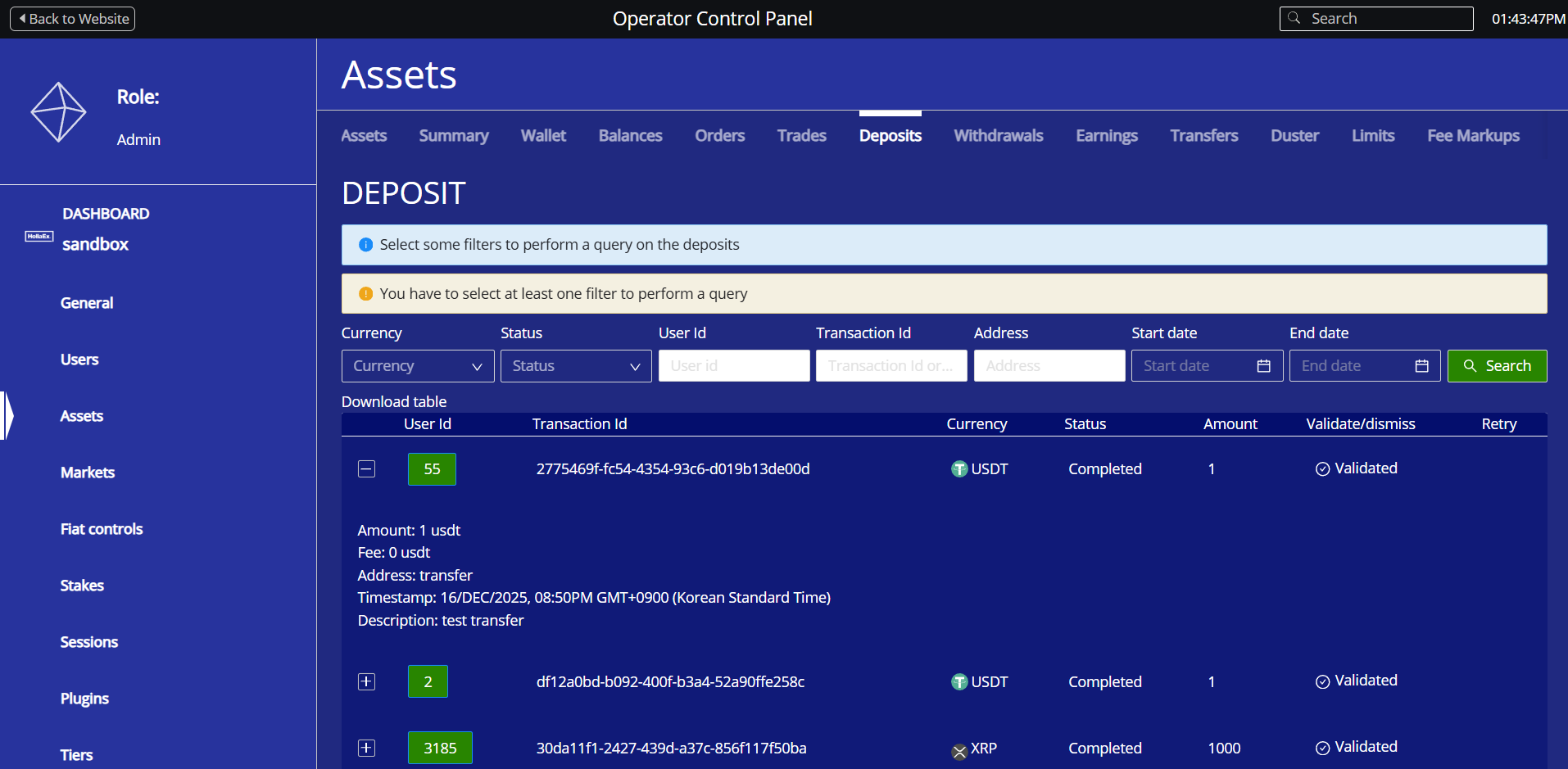
The essence of running an exchange is turning this complexity into consistent policies and automation. One way to reduce the overhead is using purpose-built exchange infrastructure such as HollaEx®. An easy-to-use crypto business control center so you’re blindly accepting random transactions.
Miners and validators do a similar job like adding new blocks and securing the network. But, Bitcoin pays for security with electricity and computation (Proof of Work), while Ethereum pays for security with staked ETH that can be penalized if validators cheat (Proof of Stake).
***
Looking to run an exchange? Try our white-label software.


.png)