

🆕 Ethereum’s “Brain Drain”
Could the ETH value start to drop as key tech talent start to back away from the project? Learn how the founder Vitalik thinks in 2026.

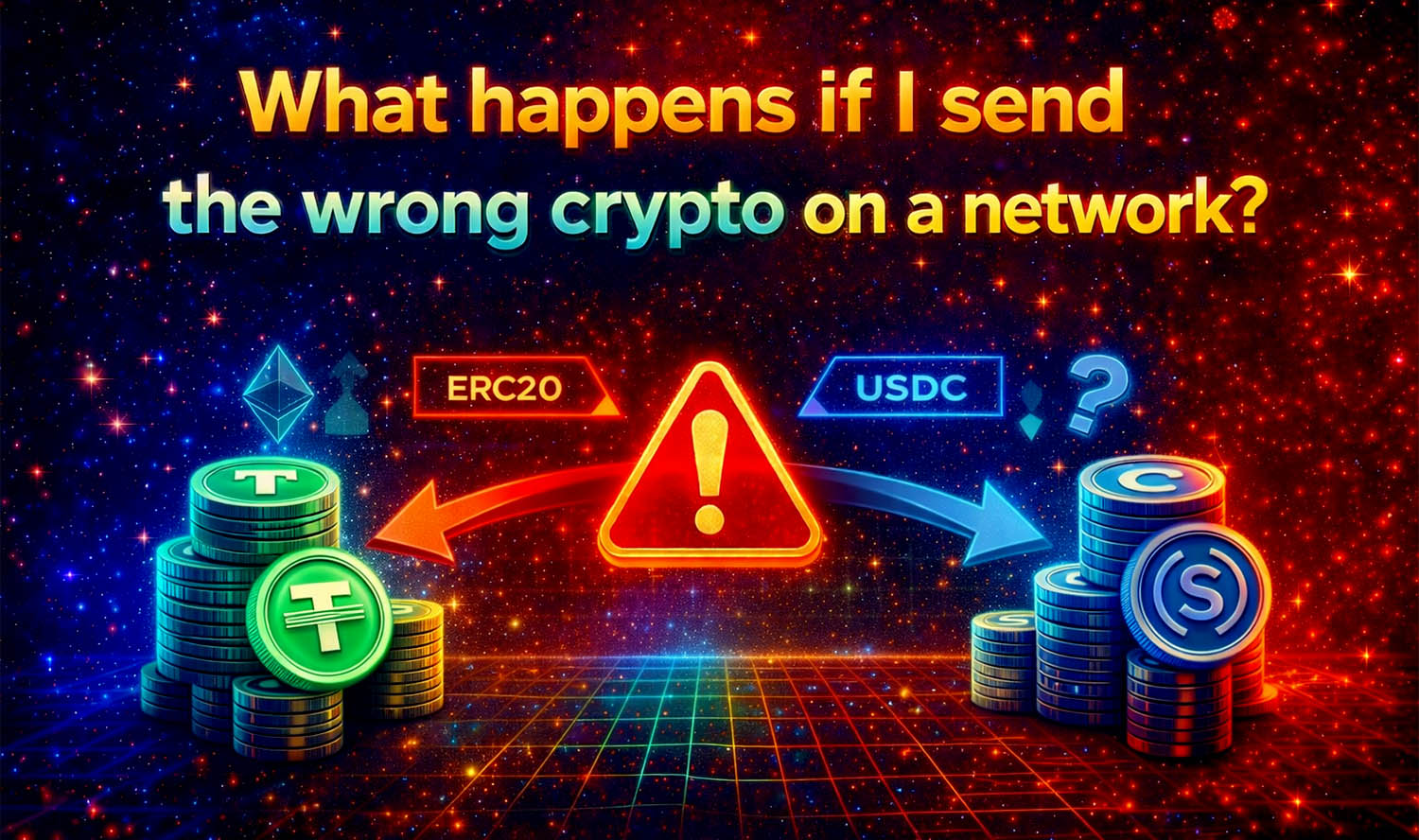
The frustrating truth is that “sending the wrong coin or using the wrong network” doesn’t always mean your funds are gone, but it does mean your deposit probably won’t be credited automatically. What happens next depends on one big question:
If you control the destination wallet (you have the seed phrase), you can sometimes recover the funds.
A very common mistake example: you meant to withdraw/deposit USDC (ERC-20) on Ethereum, but used USDT (ERC-20) on Ethereum.
If you don’t control the destination (e.g., it’s an exchange address), you’ll need to contact support. And if you’re not comfortable switching networks/tokens in wallets, don’t send more transactions. Open a ticket instead.
This guide focuses on the three most common real-world cases: correct network but sent the wrong coin, unsupported network deposits and missing memos/tags (on exchanges), plus a quick note for the self-custody scenario.
Before you try random fixes, pause and collect the facts. When recoveries fail, it’s often because people can’t provide the exact transaction details later, or they keep sending more funds into the same mistake.
At minimum, you want:
If your transaction was picked up by the network (blockchain), you should be able to verify all the above details on the blockchains block explorer, and link to the block explorer for extra clarity when you contact support. If your transaction didn't hit the blockchain, you might be able to cancel it because it is still pending from your exchange wallet, or personal wallet.
This is the classic mistake: you send a deposit to an exchange address, but select the wrong network. A more common variation is “right chain, wrong token”, for example, sending USDT (ERC-20) to an address the exchange displayed for USDC (ERC-20) on Ethereum.
In many cases, the deposit address is valid and the exchange may technically “receive” the funds on-chain, but their system won’t credit it, because it doesn’t match the expected asset + network combination for that deposit route.
This happens a lot on Ethereum because most ERC-20 deposit addresses look identical (they all start with 0x…). Wallets often don’t warn you, because any ERC-20 token can be sent to any Ethereum address, even if the receiving platform isn’t set up to recognize or credit it. That’s very different from sending BTC to an ETH address, which is usually caught and rejected before broadcast.
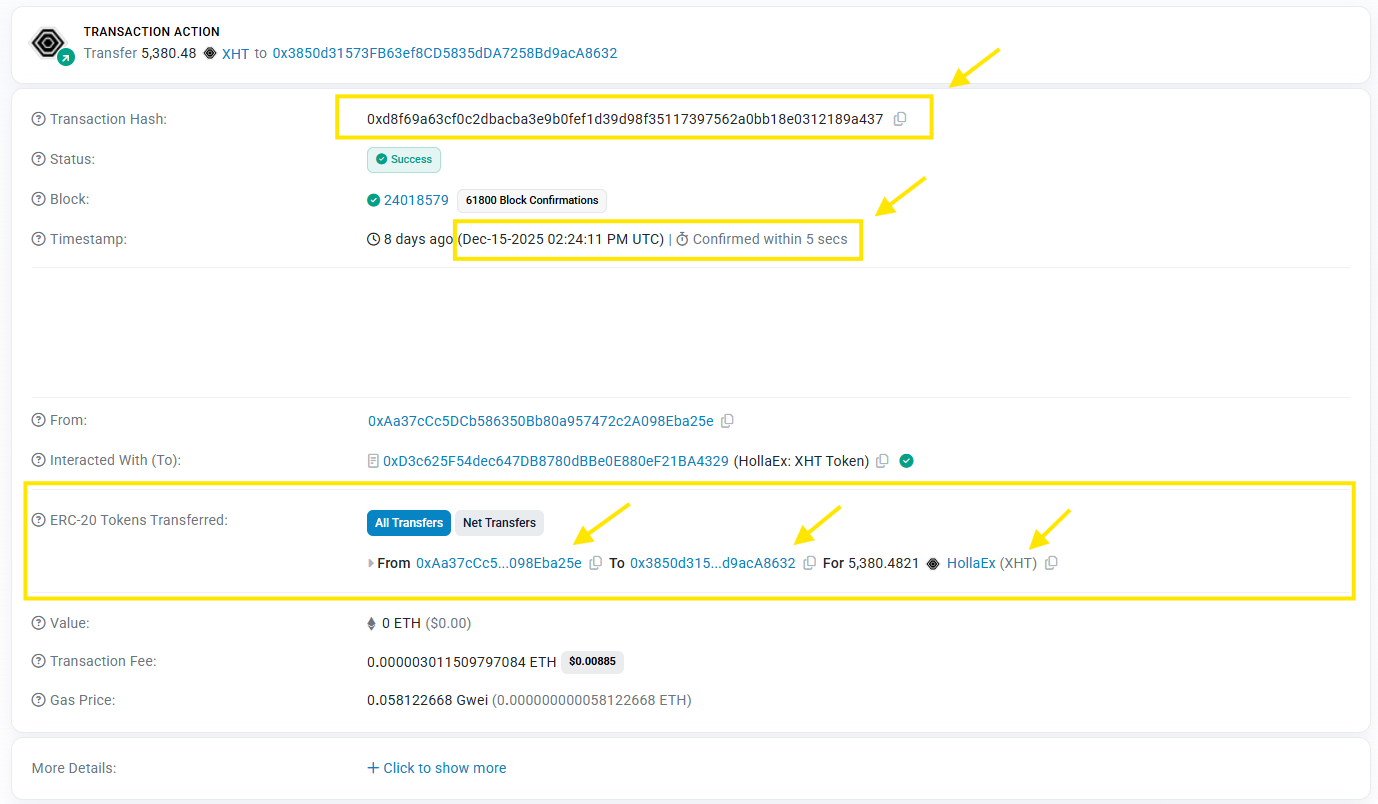
Rule of thumb: On Ethereum/ERC-20, always double-check the token name + network before you send, because Ethereum supports thousands of tokens, and the chain itself won’t stop you from sending the wrong one.
Open a support ticket and explicitly request asset recovery for an unsupported deposit. Keep the message short and precise.
Include:
Use this phrasing (it works better than vague wording):
“I’m requesting asset recovery for _________. Here is the transaction information…”
Note: If your mistake was made on Ethereum blockchain, you can double check it by using https://etherscan.io
Even when recovery is possible, exchanges often treat it as a manual, risky, internal operation, so they commonly:
Some networks require extra info because exchanges often use shared deposit addresses. XRP is the classic example that includes a memo or tag (also XLM, TON, and others depending on platform setup). Without the memo/tag, the funds can arrive, but the exchange won’t know which account the funds belong to. This tag or memo is like an Australian Bank 'BSB' number or similar to a 'routing number' in other regions.
Open a ticket requesting manual credit for a missing ‘memo/tag’ deposit.
Provide:
Just like unsupported deposits, memo-related recoveries often:
A few other scenarios exist, but they boil down to the same principle: crypto doesn’t arrive to “a person,” it arrives to an address on a specific network, and sometimes that address can’t do anything with it.
Examples:
Some of these cases, especially the burn address will unfortunately mean 'Game Over', however for smart contract, there might be an owner or controller of that smart contract and so more understanding of the origin/creator of that smart contract will be needed in order to contact them.
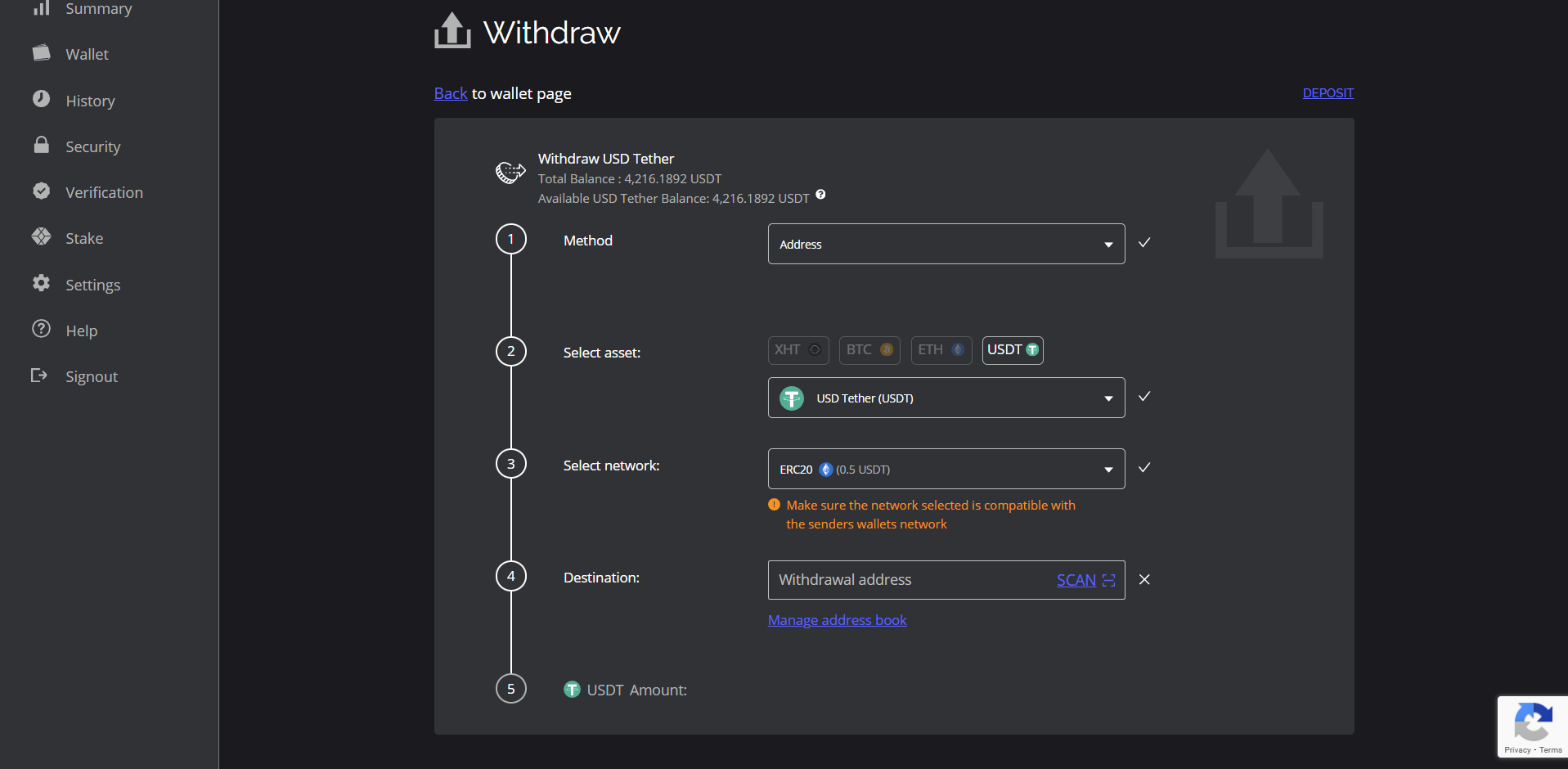
A lot of these problems are UX problems: coin vs chain vs token standard all sharing similar logos such as ETH. HollaEx® is built to reduce those errors at the source by making the deposit experience harder to misuse, through clear network labeling, iconography, thought-out steps, and wallet-style address checks that help prevent sending to the wrong place in the first place.
Start offering your customers safe and easy to use crypto wallets and their own unique deposit address today with our white-label crypto software. Request a trail and see how it can benefit your business today.


.png)