

🆕 Ethereum’s “Brain Drain”
Could the ETH value start to drop as key tech talent start to back away from the project? Learn how the founder Vitalik thinks in 2026.

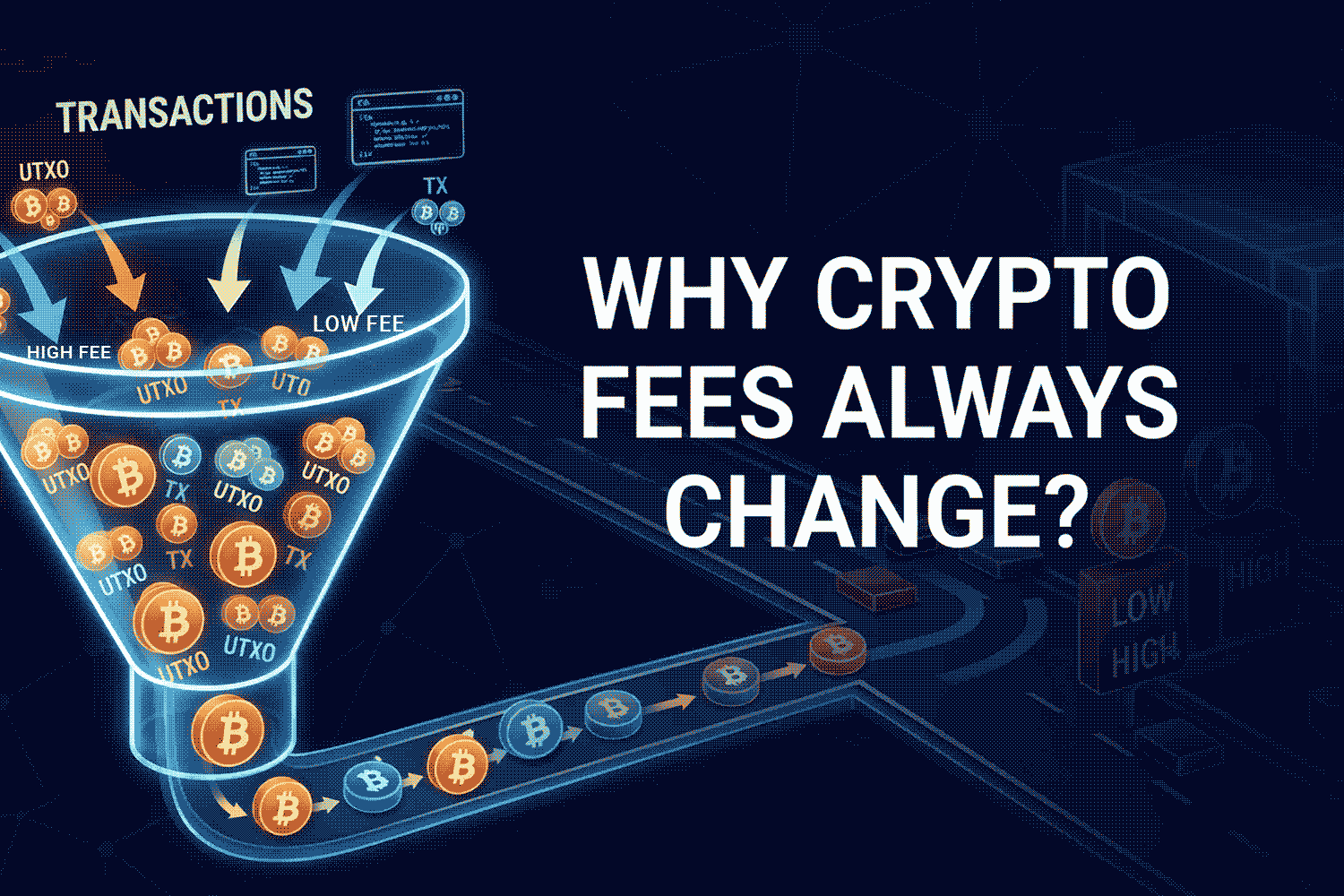
Crypto transaction fees on the blockchain may feel random but actually there is some sophisticated logic going on and it has to do with “blocksize”. Think of each “block” on the blockchain as a mail truck with limited capacity for mail and packages. When there is a surge in demand to send packages, say on holidays, people may pay more for priority shipping to get packages sent or received in a timely manner. When lots of people want to receive or send packages at the same time, they might bid up what they’re willing to pay to get into the next mail delivery van. That bidding pressure is what people mean by ‘blockspace,’ and it’s one of the major reasons why crypto transaction fees move minute-to-minute.
.jpg)
Limited capacity per block: As mentioned in the intro there is limited space on the blockchain for many transactions (or so much computation) per block. When more people want to transact than the chain can fill up quickly and fees rise as people compete to get their transaction done quicker.
Below are the 6 biggest reasons why transaction fees change all the time on blockchain transactions:
1. Live bidding for priority (mempool): Pending transactions wait in a mempool (a pool of unfinished transaction waiting). Miners/validators usually pick the ones paying the best “fee per unit of space,” so users effectively outbid each other when things are busy.
2. Ethereum’s base fee adjusts automatically: On Ethereum-style networks, the protocol raises or lowers a “base fee” each block depending on congestion, and you can add a tip to get in faster, so fees can move block-by-block.
3. Token price moves change the “$ cost”: Even if the fee in ETH or BTC stays the same, the USD value of that fee cost changes when the unit price of ETH and BTC changes.
4. Bots and rush events spike demand: NFT mints, airdrops, market volatility, arbitrage/liquidations, and MEV competition (bots) can cause sudden fee surges.
5. Exchanges/wallets may add their own layer: Withdrawal fees added by the exchange operator, or wallet routing choices can change independently of the network fee.
6. Different transactions cost different amounts:
Sometimes the transaction fee could be different in bitcoin due to something called ‘UTXOs’, unspent transactions, or a lot of input/outputs.
Basically, if a person sends Bitcoin from a wallet that has accumulated small transactions from the past (0.00025 BTC received here, 0.0001 BTC and so on), it has effectively collected a lot of “loose change”.

Imagine you have pennies, dimes and nickels. It can be time consuming and annoying to actually calculate and track all these coins, and a similar logic applies in Bitcoin’s blockchain. A transaction with a lot of UTXO will literally take up a lot more space on the blockchain, which is why there is an added fee for using “loose change”.
.jpg)
Note: Exchange operators or crypto businesses can use sweeping to clear up expensive UTXO wallets.
Note: UTXOs don’t apply to Ethereum transactions.
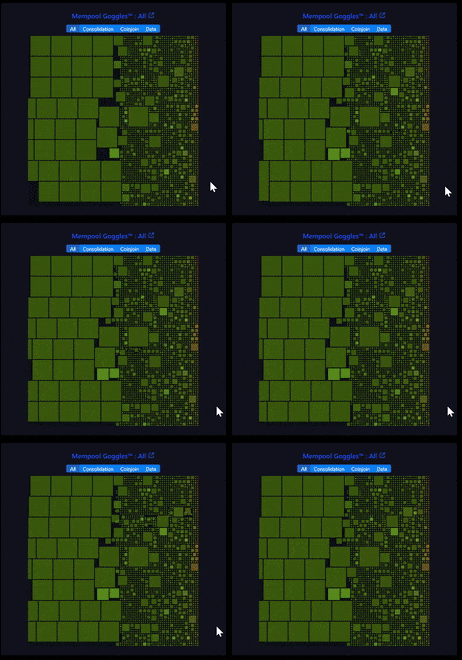
For the geeks out there, this website tracks the real-time transaction waiting to be in the next block for bitcoin and the last few successful blocks, as well as a visual representation of each transaction and the space they take in the coming next block: https://mempool.space
In the end, fees move around because blockchain capacity is limited, demand comes in waves, and more complex transactions (smart contracts and a lot of UTXOs) take more work. On top of that, the token’s price changes, which can make the same on-chain fee look cheaper or more expensive in USD terms.
***
Looking to optimize your business with on-chain transaction? Add blockchain to your business today with HollaEx® white-label.


.png)